|
Additional Information on This 1931 Radio
A Canadian Masterpiece from Radio’s Golden Age
In the early years of the Great Depression, when much of
the world struggled through economic uncertainty, radio offered something
priceless: connection. Families gathered nightly around glowing dials and
illuminated tubes to hear music, drama, comedy, news, and voices arriving from
hundreds of miles away. In Canada, few companies represented that new age of
communication better than Rogers-Majestic.
Among the company’s most elegant and technically
accomplished early consoles was the 1931 Rogers Majestic Model 610, a striking
floor model powered by the respected chassis 641.
 Today, surviving examples are
scarce, especially complete original sets with known serial numbers such as
serial number 6215 — a radio that stands not merely as a collectible, but as an
authentic artifact from one of the most transformative
periods in Canadian
technological history. Today, surviving examples are
scarce, especially complete original sets with known serial numbers such as
serial number 6215 — a radio that stands not merely as a collectible, but as an
authentic artifact from one of the most transformative
periods in Canadian
technological history.
The Rogers Majestic 610 represents far more than a
household appliance. It is a beautifully crafted piece of Canadian industrial
design, a triumph of early electrical engineering, and a surviving witness to
the dawn of mass entertainment in Canada.
Rogers-Majestic and the Rise of Canadian Radio
The story of the Rogers Majestic 610 begins with one of
the most important names in Canadian communications history: Ted Rogers Sr.
Long before the modern telecommunications empire
associated with the Rogers name, Edward S. Rogers Sr. revolutionized Canadian
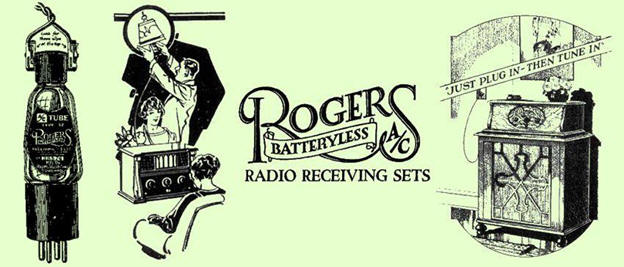
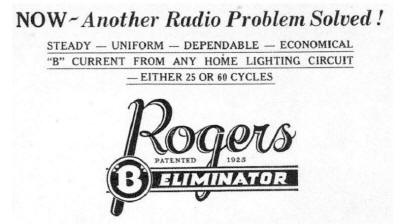
broadcasting through the development of reliable AC-operated radio tubes. Prior
to this innovation, most radios depended on cumbersome wet-cell batteries that
were expensive, messy, and inconvenient. Rogers’ “batteryless” radio technology
helped transform radio from a hobbyist’s novelty into an essential household
appliance.
By the late 1920s, Rogers-Majestic Corporation Ltd. had
become one of Canada’s dominant radio manufacturers. Operating from Toronto,
Ontario, the company produced sophisticated receivers that competed directly
with the best American sets from RCA, Philco, Majestic, and Atwater Kent.
The Rogers Majestic Model 610 emerged during this period
of rapid innovation and national expansion in broadcasting. Produced in 1931, it
arrived just as radio became the centerpiece of middle-class family life.
 A
Radio Built for the Modern Home A
Radio Built for the Modern Home
The Rogers Majestic 610 was designed not simply as
electronics, but as furniture intended to occupy a place of prominence in the
living room. Early console radios were expected to complement fine household
décor, and Rogers invested heavily in cabinet craftsmanship.
The cabinet styling of the 610 beautifully captures the
transitional aesthetics of the early 1930s. Elements of late-1920s traditional
furniture design remain visible in the tall proportions and decorative grille
openings, while subtle Art Deco influences appear in the streamlined lines and
restrained ornamentation.
Constructed primarily from walnut veneers over hardwood
framing, the cabinet projected warmth, stability, and sophistication. The radio
was meant to impress visitors as much as it entertained its owners.
When viewed today, the 610 still conveys the visual
confidence of the era. Its proportions are elegant without being excessive, and
the craftsmanship reflects a level of construction rarely seen in later
mass-produced consumer electronics.
The Chassis 641: Engineering Excellence
Beneath the cabinet resides the heart of the radio: the
Rogers chassis 641.
At a time when radio technology was evolving rapidly,
Rogers engineered the 641 chassis to deliver both reliability and superior audio
performance. Unlike many cheaper receivers of the period, the 610 incorporated a
push-pull audio output stage using dual type-245 tubes, giving the radio
unusually rich and room-filling sound.
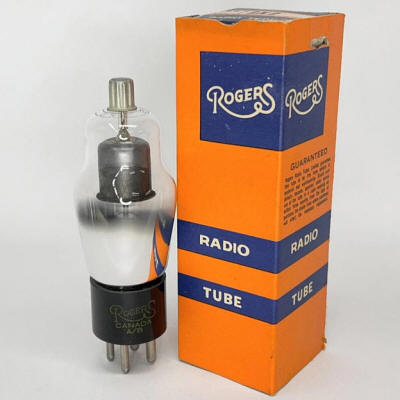
 The chassis employed a six-tube lineup consisting of: The chassis employed a six-tube lineup consisting of:
Three type-224 tubes
Two type-245 output tubes
One type-280 rectifier tube
The set used a Tuned Radio Frequency (TRF) design rather
than the increasingly popular superheterodyne architecture. Although
superheterodyne circuits would soon dominate the industry, a well-designed TRF
receiver such as the Rogers 641 could still deliver remarkable performance.
Collectors and restorers today often comment on the
impressive tonal quality of restored Rogers consoles. The combination of
high-quality transformers, large electrodynamic speakers, and push-pull
amplification allowed these radios to produce sound far beyond what most people
expect from a 1931 receiver.
The chassis 641 was also shared with several related
Rogers models, including the Rogers 620, allowing the company to standardize
manufacturing during economically difficult times.
Radio During the Great Depression
To fully appreciate the Rogers Majestic 610, it is
important to understand the historical environment into which it was introduced.
In 1931, Canada was deep in the Great Depression.
Unemployment was rising, businesses were failing, and families everywhere faced
uncertainty. Yet radio sales continued surprisingly strong because radio
provided inexpensive entertainment at home.
 For many households, a console radio represented optimism
and modernity. It connected listeners to hockey games, orchestras, political
speeches, serialized dramas, and international news. Families gathered around
radios much the same way later generations gathered around televisions. For many households, a console radio represented optimism
and modernity. It connected listeners to hockey games, orchestras, political
speeches, serialized dramas, and international news. Families gathered around
radios much the same way later generations gathered around televisions.
Owning a fine console such as the Rogers Majestic 610
signaled that a household embraced the newest technological advances. Radios
became social centers of the home, often occupying the same symbolic role once
reserved for the piano.
The Rogers advertising of the period emphasized exactly
this idea. Company advertisements promised not only superior sound, but a richer
family life filled with music, drama, laughter, and connection.
|